RSS feed: Daily tech news Daily tech news
  • A new kind of magnetism could unlock faster, more efficient computers
    Scientists have discovered evidence of altermagnetism in a thin, highly tunable material that could help electronics use electron spin instead of relying only on electrical charge. The unusual magnetic state may enable faster, more energy-efficient devices without the unwanted magnetic interference caused by conventional magnets.
  • A new process turns plastic waste into gasoline and diesel fuel
    Scientists at Oak Ridge National Laboratory have developed a surprisingly simple way to turn polyethylene, the common plastic used in shopping bags and cutting boards, into gasoline and diesel-like fuels. The process uses inexpensive aluminum-based molten salts to break long plastic molecules into smaller hydrocarbons, producing about 60% gasoline under relatively mild conditions.
  • Billions in rare earth elements may be hiding in America’s coal ash
    Scientists are looking to diatoms, sea sponges, and plants for a cleaner way to recover rare earth elements and other valuable minerals hidden inside coal ash, red mud, and mine tailings. The bio-inspired approach could turn massive industrial waste piles into useful materials while reducing energy use, harsh chemicals, and reliance on new mining.
  • Scientists turn seawater into fresh water without harmful brine
    Scientists have developed a solar-powered desalination system that turns seawater into fresh water while removing nearly all of the leftover salt as a solid instead of producing harmful brine. The self-cleaning technology could also recover valuable minerals such as lithium, potentially turning desalination waste into a useful resource.
  • Scientists are building a microscope powered by a quantum computer
    Scientists are combining an electron microscope with a quantum computer to squeeze far more information from each electron. The approach could reveal faint details with fewer electrons, helping protect fragile samples that conventional microscopy can damage.
  • Tiny nanolaser could cut computer energy use in half
    Scientists have created an ultra-small nanolaser that could eventually allow microchips to transmit information with light instead of electricity, potentially making computers faster while cutting energy use roughly in half. Thousands of the lasers could fit on a single chip, opening possibilities for more efficient data centers, smartphones, and advanced medical sensors.

Consequences of plagiarism

by Florius
Legal consequences
 

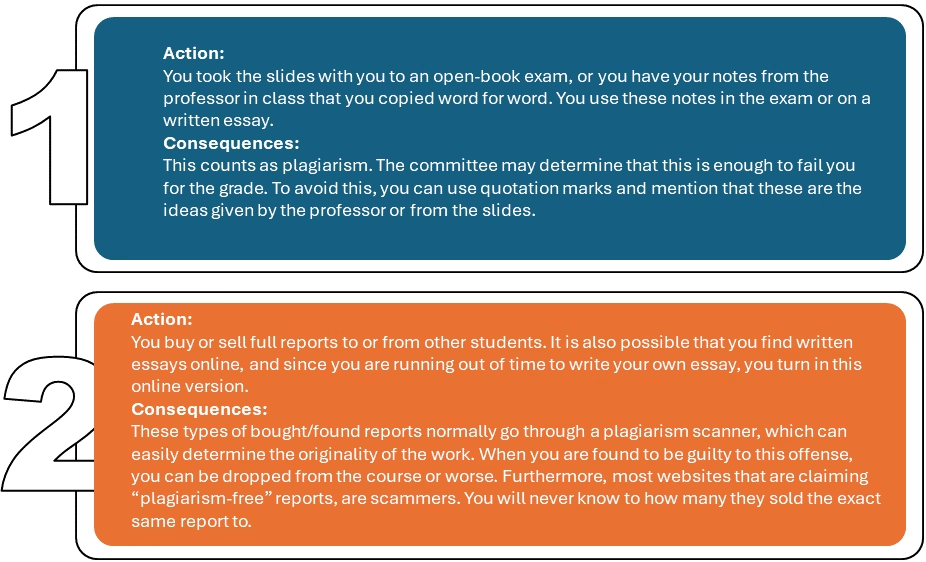
The consequences for committing plagiarism can be severe, including penalties such as receiving a failing grade or even expulsion from the university. Universities educate students on how to avoid plagiarism and the potential consequences of committing it. On my article on the different types of plagiarism, I ordered them in severity. Take a look there to see what is the most severe type of plagiarism.

Figure listing various forms of academic dishonesty—such as plagiarism, cheating, and fabrication—alongside potential consequences including failing grades, disciplinary action, or expulsion. Designed as an educational aid for promoting academic integrity.

1. Investigation & What happens afterwards?

Upon discovery of plagiarism, the incident will be reported to the dean for review. Typically, a meeting between the course supervisor, dean, and student will be held to determine the appropriate action. Minor incidents may be handled directly, while major incidents are typically overseen by a university committee. The student may also be required to seek external counseling. Each university has its own academic integrity committee, so the specific penalties may vary. Regardless, plagiarism should not be taken lightly as the consequences can be severe.

Leave a comment

This site uses Akismet to reduce spam. Learn how your comment data is processed.