
RSS feed: Daily tech news Daily tech news
  • Billions in rare earth elements may be hiding in America’s coal ash
    Scientists are looking to diatoms, sea sponges, and plants for a cleaner way to recover rare earth elements and other valuable minerals hidden inside coal ash, red mud, and mine tailings. The bio-inspired approach could turn massive industrial waste piles into useful materials while reducing energy use, harsh chemicals, and reliance on new mining.
  • Scientists turn seawater into fresh water without harmful brine
    Scientists have developed a solar-powered desalination system that turns seawater into fresh water while removing nearly all of the leftover salt as a solid instead of producing harmful brine. The self-cleaning technology could also recover valuable minerals such as lithium, potentially turning desalination waste into a useful resource.
  • Scientists are building a microscope powered by a quantum computer
    Scientists are combining an electron microscope with a quantum computer to squeeze far more information from each electron. The approach could reveal faint details with fewer electrons, helping protect fragile samples that conventional microscopy can damage.
  • Tiny nanolaser could cut computer energy use in half
    Scientists have created an ultra-small nanolaser that could eventually allow microchips to transmit information with light instead of electricity, potentially making computers faster while cutting energy use roughly in half. Thousands of the lasers could fit on a single chip, opening possibilities for more efficient data centers, smartphones, and advanced medical sensors.
  • Quantum oscillations defy expectations in this exotic material
    Scientists have uncovered an unusual form of electron behavior in zirconium pentatelluride, a quantum material that can act as both an insulator and a conductor. Under temperatures near absolute zero and magnetic fields reaching 60 tesla, electrons produced quantum oscillations that continued even after conventional physics predicted they should disappear.
  • A new recipe unlocks “impossible” nanocrystals for LEDs, implants, and superconductors
    Scientists have cracked a long-standing chemistry problem, creating nanocrystals from tough metal nitrides that were previously extremely difficult to produce at this scale. The breakthrough could turn familiar materials used in LEDs, implants, and superconductors into building blocks for flexible electronics, printable devices, and other technologies.
Category

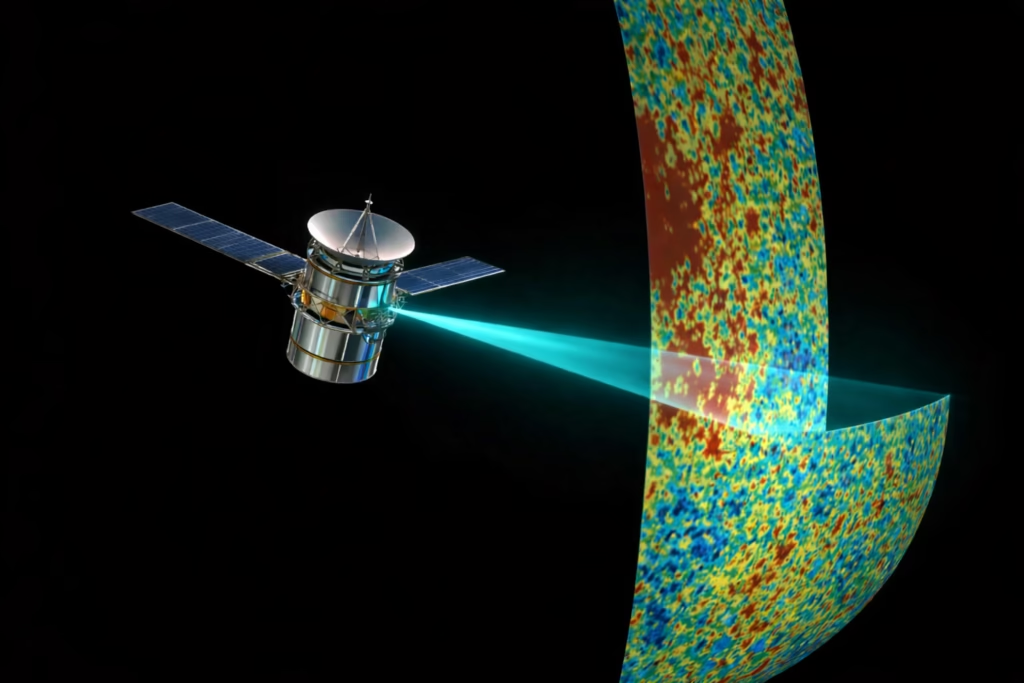
Mapping the Cosmic Microwave Background
The Mollweide projection preserves area while unfolding a spherical sky into two dimensions, allowing full-sky CMB data to be visualized and analyzed consistently....
Illustration of a futuristic battle scene between two armored warriors symbolizing MOSFET and IGBT. The MOSFET side features a sleek, agile figure wielding a glowing sword in a tech-blue environment, while the IGBT side shows a bulky, powerful mech-like figure firing from a heavy arm cannon in an industrial orange setting. The image represents the comparison between MOSFETs and IGBTs in power electronics.
IGBT vs MOSFET: How to Choose the Right Power Switch
This article compares IGBTs and MOSFETs for power electronics applications It covers efficiency trade-offs, conduction and switching losses, voltage/current guidelines, structural differences (such as body...
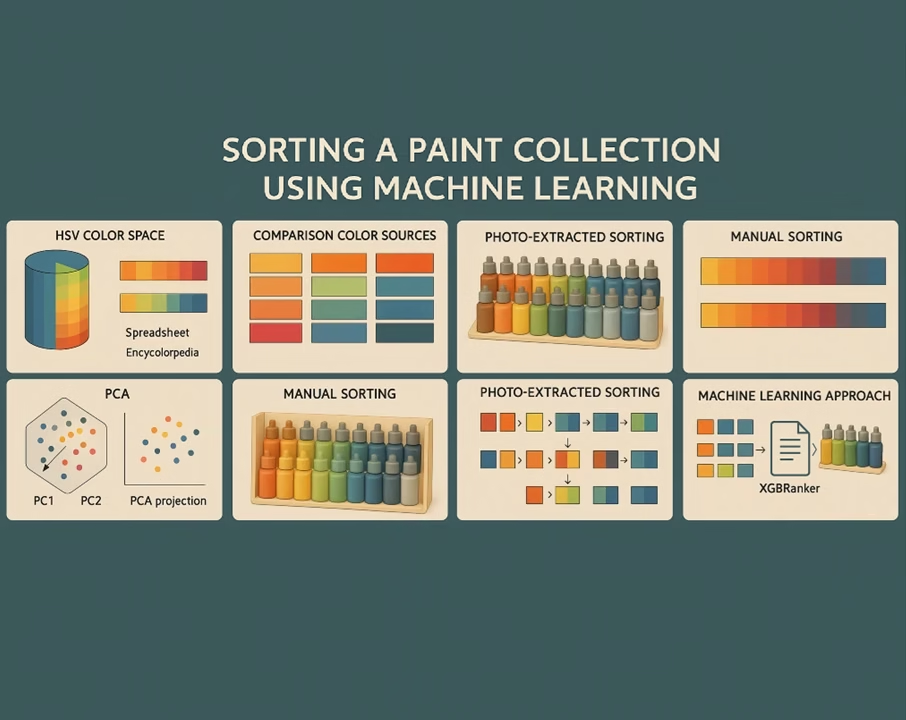
Abstract visual of machine learning concepts with neural networks, digital data, and layered computing elements, symbolizing advanced AI and automation.
Sorting Vallejo Paints with Machine Learning
This article explores how to visually sort color collections using both statistics and machine learning. After experimenting with PCA for dimensionality reduction and simple color...
Split-image of a classical painting demonstrating K-means clustering for color reduction; left side is the original detailed artwork, and right side shows the simplified clustered version using fewer color groups.
K-Means Clustering for Colors
Discover how K-Means clustering helps analyze and evaluate Vallejo Model Color paints using Rembrandt’s masterpiece as a case study. Learn to identify gaps in your...
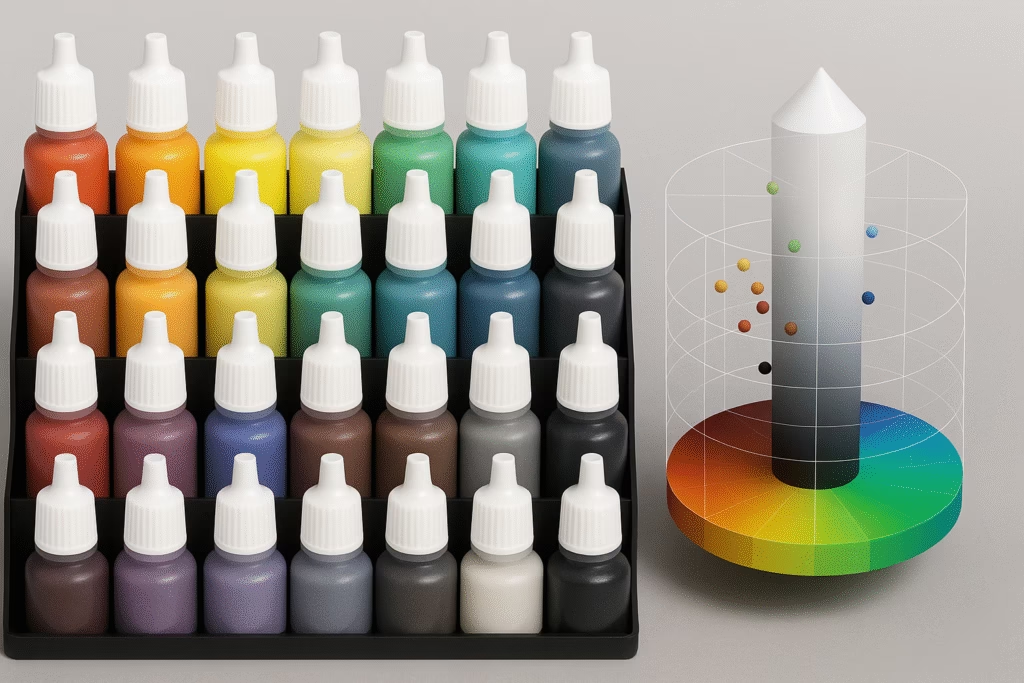
A digital image showing 28 acrylic paint bottles organized in a black plastic rack by color gradient. To the right is a 3D HSV color model represented as a transparent cylinder with a vertical grayscale axis and colored spheres floating inside, depicting paint positions in hue, saturation, and value space.
HSV color chart for vallejo paint
Curious how your paints stack up in color space? I analyzed my Vallejo paints by converting RGB values to HSV, visualizing them in 3D, and...
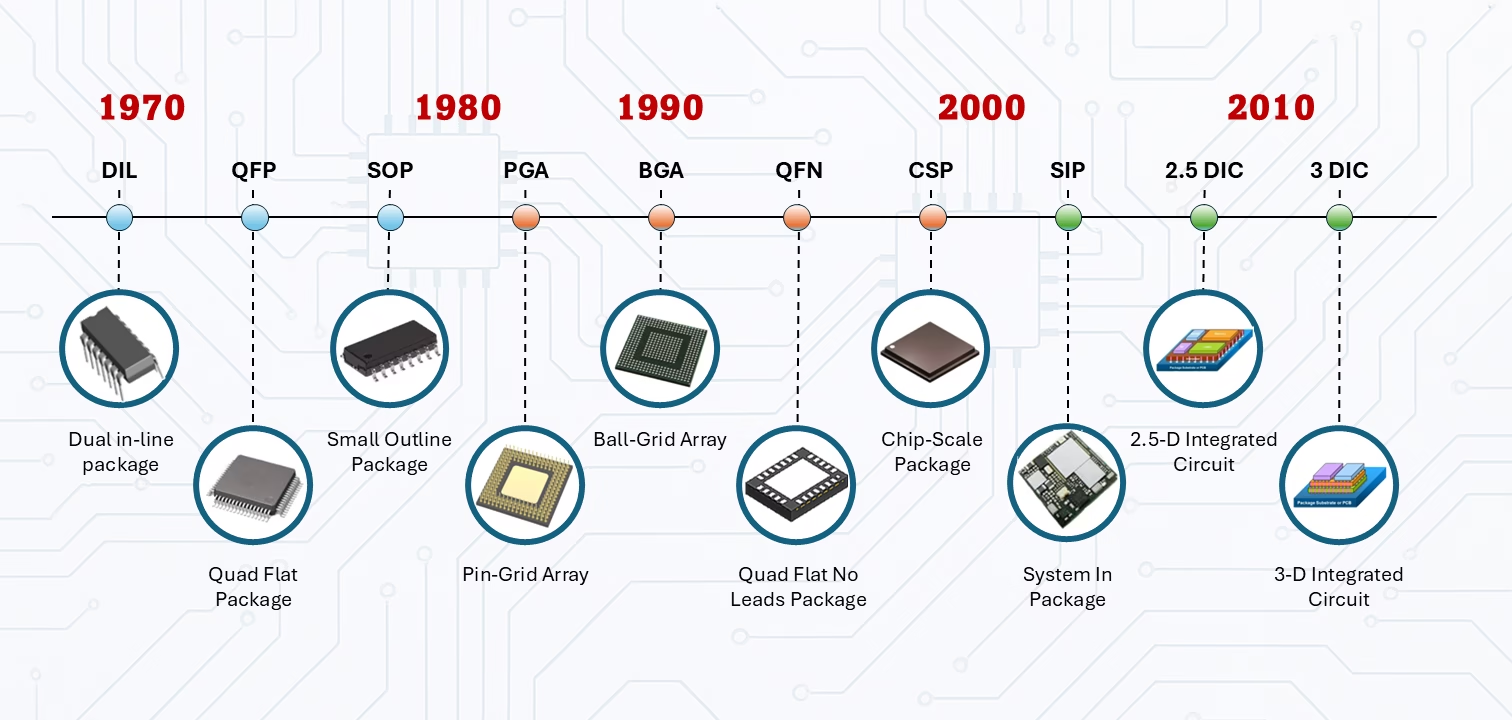
Fig. 9: Packaging Technology Timeline. A chronological overview showing the evolution of different semiconductor packaging types over time.
Semiconductor Packaging Technology
Wire bonding and flip-chip packaging represent two fundamental approaches to chip interconnection. While wire bonding offers simplicity and cost benefits, flip-chip allows higher density and...